
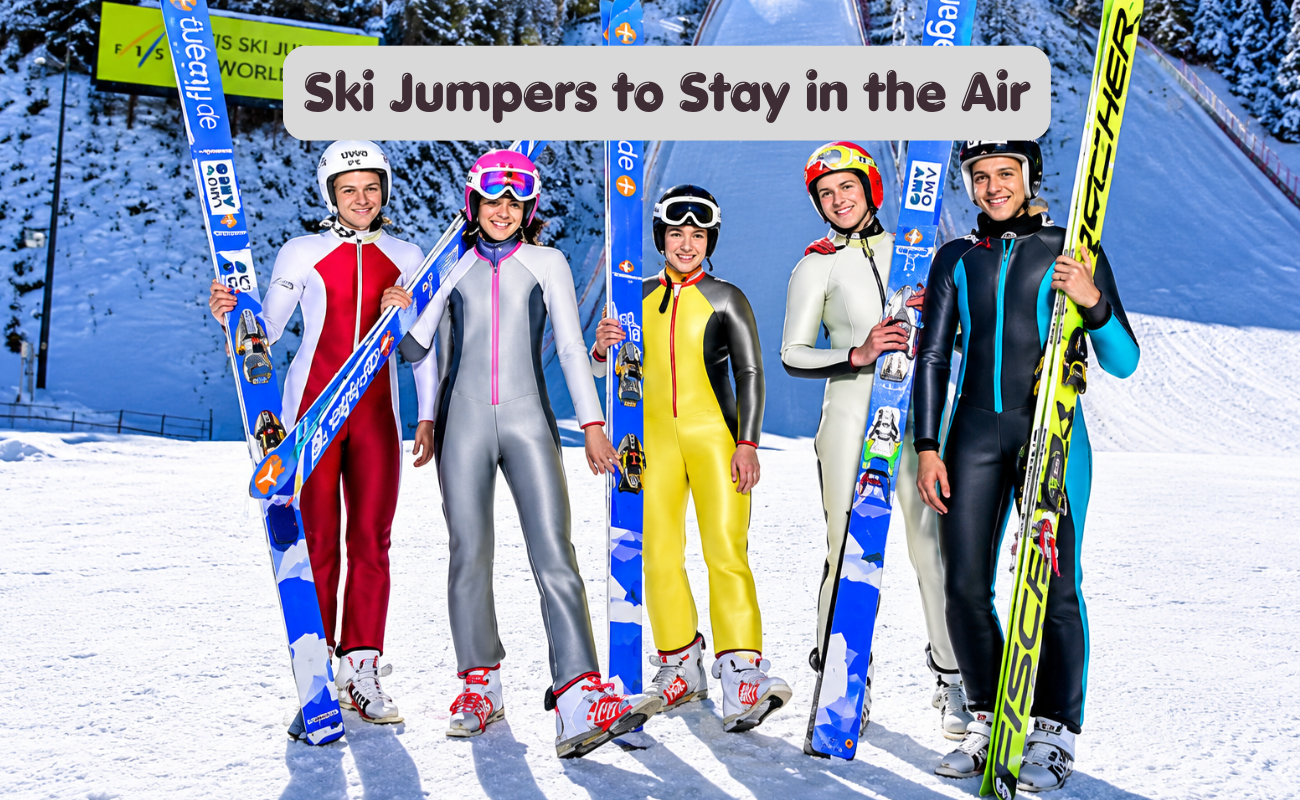
How is it possible for ski jumpers to stay in the air so long and how do they train for that? It seems like flying but it’s physics. Jumpers accelerate up a steep ramp and maximize their body lift and glide with V-shaped skis over hundreds of feet.
Years of strength, balance and mind training lie behind every jump. This guide describes the science of long flights, techniques for adding distance and the annual routines for athletes.
How Do Ski Jumpers Stay in the Air?
Lift, in a nutshell. As the jumper is running quickly, the air flows over and under the body and skis. The airflow in the right position pushes up, canceling out some of the gravitational pull. Gravity never goes away. The jumper just drops at a slower rate which gives a long, smooth glide.
Speed Is the First Secret
It all begins on the in-run, the steep ramp up to the edge. Top jumpers reach about 85 to 100 km/h (53 to 62 mph). Lift requires the presence of fast-moving air, or a jumper would drop out of the air shortly after takeoff.
The V-Style Changed Everything
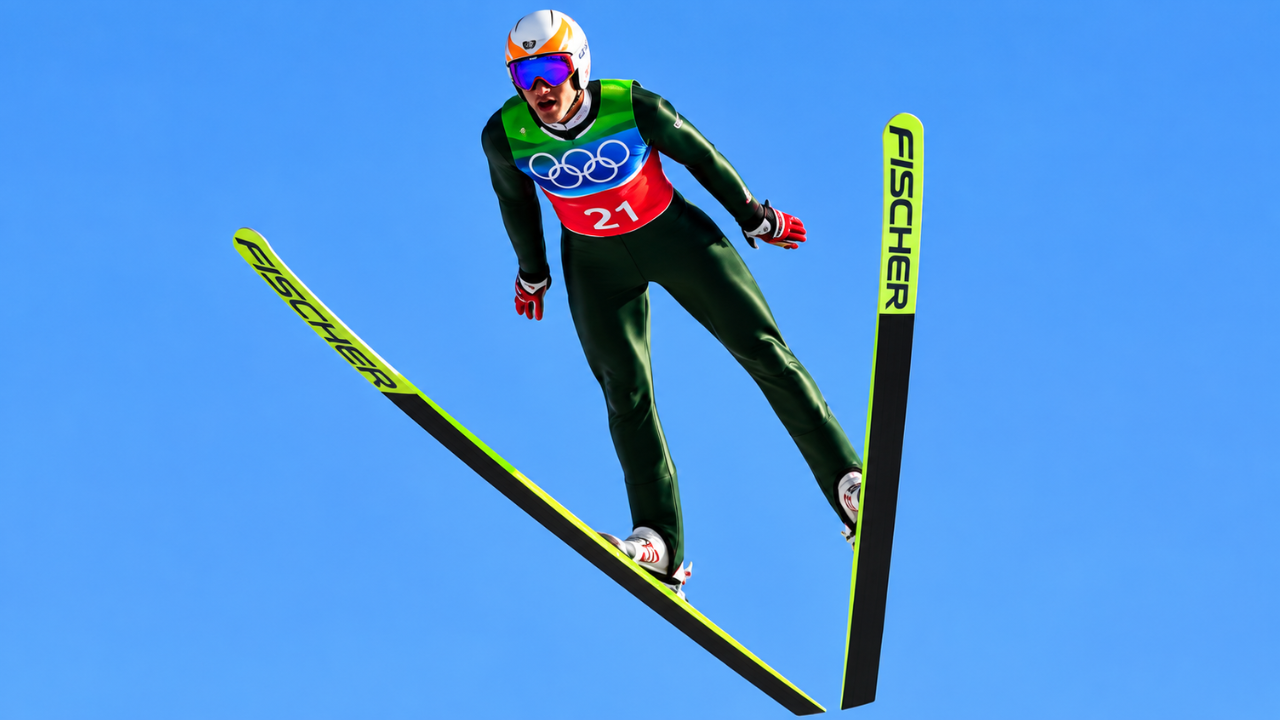
In the past, skiers didn’t turn the skis inwards when jumping. During the 1980s, it was discovered that the tips could be spread apart in a V configuration for increased lift.It was discovered during the 1980’s that the tips could be spread out in a V to produce much greater lift. The distance increased rapidly, and it is the jumping distance practically all of today’s top jumpers employ.
The V-style has several benefits:
- More lift
- Better balance
- Longer flights
- Greater distance
Body Position Is Critical
A small change in posture can cause a number of metres variation in a jump. A raised head will get drag for instance.
| Body Part | Why It Matters |
|---|---|
| Head low | Cuts air resistance |
| Arms back | Keeps airflow smooth |
| Hips forward | Helps balance |
| Skis angled | Adds lift |
| Core tight | Keeps flight steady |
They Don’t Just Jump
Many people envision one big leap. The take off is in fact fast and low noise. JUMPERS do not attempt to jump as high as they can. They make the air flow run smoothly and try to conserve forward momentum.
Read also: Royal Challengers Bengaluru vs Kolkata Knight Riders Timeline
What Happens During Flight?
| Phase | Main Goal |
| Takeoff | Create lift |
| Early flight | Stay stable |
| Mid-flight | Glide far |
| Final phase | Prepare to land |
| Landing | Stay in control |
Jumpers make small movements while in the air. Most are not large enough to be seen on the TV, but they help to balance the flight. Also wind is important, and suits are strictly controlled to ensure no one gains more of an edge through unfair wind.
How Do Ski Jumpers Train?
Jumpers don’t spend 24 hours a day on the hill. Jumping doesn’t even make up the bulk of their workout. The majority of athletes engage in all kinds of body, skill and mind training throughout the year.
Strength Training
Legs will support a strong take off. Athletes work on squats, lunges and jumping exercises to develop power. They also work on the core, hips, back and shoulders as these muscles help to stabilize the body during flight.
Plyometric Training
Plyometric exercises train muscles to generate high amounts of power. Box jumps, depth jumps, broad jumps and single-leg hops are common types of jumps. The objective is to make a quick and quick powerful take off.
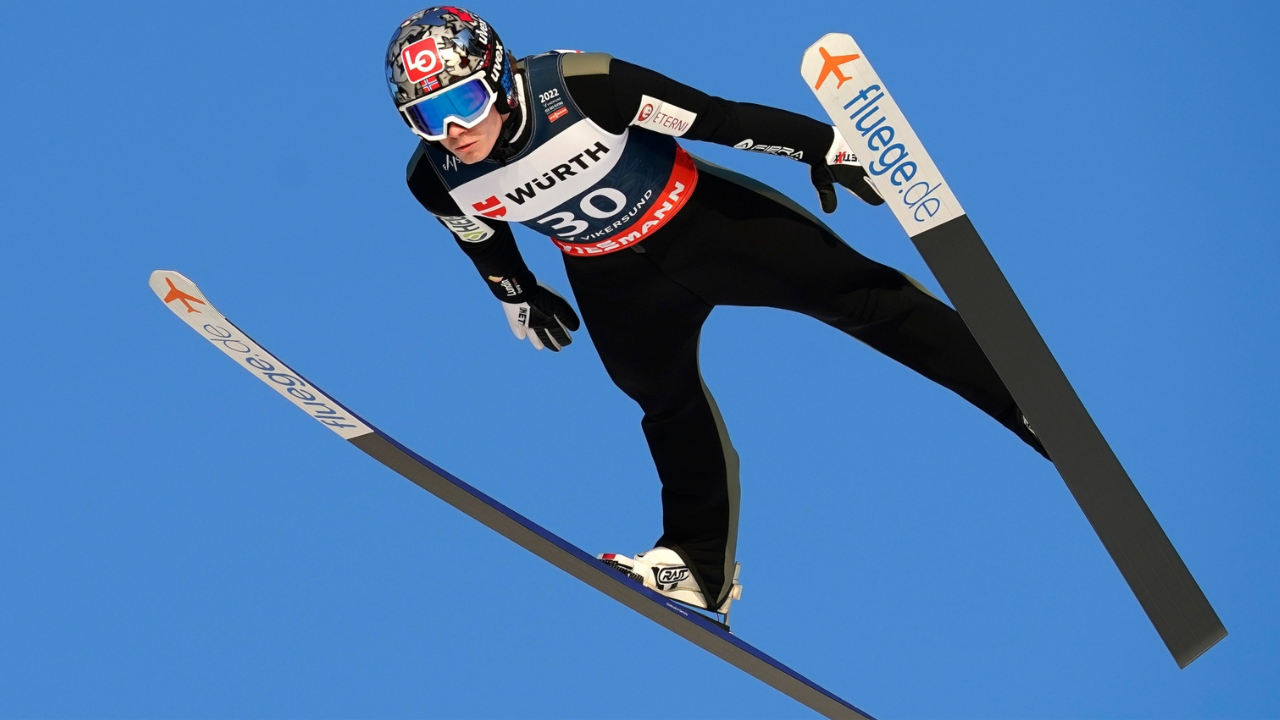
Balance Training
Jumpers perform on narrow skis at high speed and body control is important. They employ stability boards, single leg exercises and core exercises. Many will spend hours per week just on the balance.
Summer Ski Jumping
Summertime training for jumpers also! Many hills are plastic and operate without snow allowing athletes to develop their technique all year.
Mental Training
At the summit of a large hill, it’s frightening. Visualization, breathing techniques and sports psychology are used by athletes for relaxation and concentration. Their visualization of a successful jump can help them execute it the next time it is needed.
How far can ski jumpers jump?
Distance will vary depending on skill, competition rules, wind and hill size. In the largest hills (ski flying hills) the best skiers can exceed 220 meters (720 feet). It is more than 290 m (950 ft), making ski flying one of the longest of any non-motorized sport.
Final Word
So, how is it possible for ski jumpers to stay in the air so long and how do they train for that? It takes years of strength, balance and mental effort and then this comes into play: speed, lift, V-style technique, and body position. They don’t fly like birds, but they have used the same fundamental science. When you see a jump, envision all that preparation that took place in the few seconds before the jump.
FAQs
1.How is it that ski jumpers remain in the air for so long?
They accelerate while in a run, and then lift with their bodies and skis. The lift slows the fall, and causes the jump to become a long glide rather than a simple jump.
2.Do ski jumpers actually fly?
No. They glide. Lift reduces the rate at which they fall but they are still pulled to the ground by gravity. Their talent is to make the fall as slow and efficient as possible.
3.Why do skiers put their skis in a V?
The V-style balances and adds lift. Jumpers have also jumped much further in the last 20 years since it was adopted as a standard in the 80’s compared to parallel skis.
4.Do ski jumpers practice in the summer?
Yes. They employ plastic covered hills which operate without snow, and they maintain their strength, balance and mental exercise throughout the year.
5.Is ski jumping dangerous?
It’s a risk sport, as with all winter sports. However, the use of better outfitting, safer hill design, strict rules and years of training have made it much safer than in the past.
Read More: Badminton Court Length: Official Size, Measurements and Setup Guide
